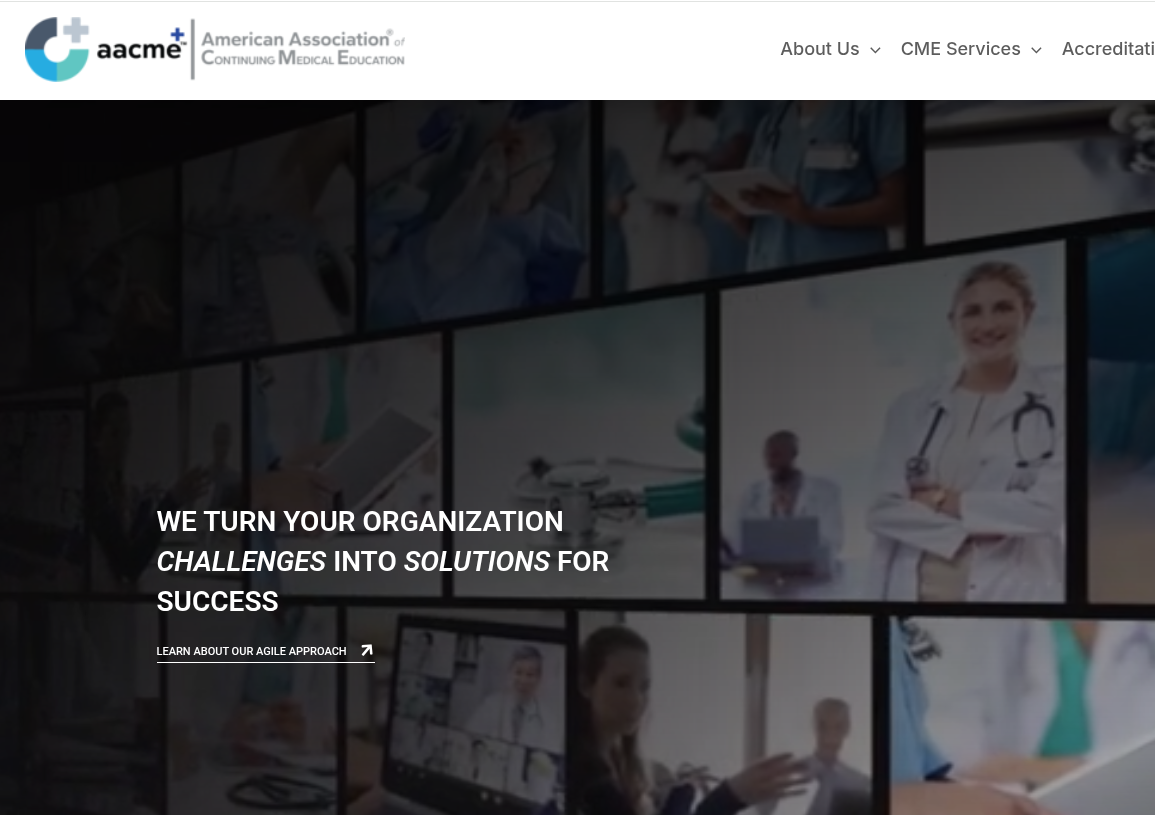
Building a Flexible Digital Experience for Aacme Plus
Many businesses face the same challenge after launching a new website: the platform looks impressive initially, but everyday content management quickly becomes frustrating for internal teams.
Marketing departments wait on developers for simple edits. Landing pages become difficult to maintain consistently. New sections break existing layouts. Content updates take longer than expected, and over time the website becomes harder to evolve.
That challenge shaped the approach behind the digital experience developed for Aacme Plus.
The goal was not simply to create another visually attractive WordPress website. The objective was to build a scalable and manageable content system that would allow the client team to create complex layouts efficiently without depending on developers for every update.
The final solution combined a bespoke WordPress theme, modular design architecture, Elementor integration, and custom-built widgets that balanced flexibility with operational simplicity.
The Problem With Many Modern Website Builds
Many organizations invest heavily in website design but overlook one critical factor: how the platform will function operationally after launch.
A website may appear polished on presentation day while still creating long-term maintenance problems internally.
Common issues include:
- Rigid templates that limit content flexibility
- Complex admin interfaces that confuse non-technical teams
- Design inconsistency across pages
- Heavy dependence on developers for small updates
- Poor scalability when new sections are added
- Slow performance caused by overloaded page builders
- Difficulty maintaining brand consistency
For growing businesses, these operational limitations become expensive over time.
“A successful website is not only easy for visitors to use — it should also be easy for teams to manage internally every day.”
The Aacme Plus project focused heavily on solving these practical workflow challenges from the beginning.
Understanding the Aacme Plus Vision
The project required more than a standard template implementation.
Aacme Plus needed a professional digital presence capable of supporting dynamic content structures while remaining manageable for internal teams responsible for regular updates.
The platform needed to support:
- Flexible content layouts
- Consistent visual branding
- Scalable page structures
- Easy day-to-day content editing
- Modular section reuse
- Responsive user experience
- Long-term maintainability
Instead of relying on rigid prebuilt templates, the solution centered around modular architecture.
Why Modular Design Architecture Matters
Traditional website structures often create unnecessary limitations. Pages become tightly coupled to fixed templates, making future updates increasingly difficult.
Modular architecture approaches the problem differently.
Instead of designing isolated pages, the website is built using reusable content components and flexible layout systems.
This creates several advantages:
- Faster content creation
- Greater layout consistency
- Reduced development dependency
- Simpler scaling for new sections
- More efficient content workflows
- Cleaner long-term maintenance
For Aacme Plus, modular design became a core operational strategy rather than only a technical preference.
The Role of Elementor in the Project
Elementor was selected as part of the implementation strategy because it provided a flexible visual editing environment while allowing deeper customization through custom widget development.
However, successful Elementor projects require careful engineering.
Many websites become overloaded with unnecessary widgets, inconsistent styling, and bloated page structures. Without proper planning, flexibility can quickly become chaos.
The Aacme Plus implementation focused on controlled flexibility.
Structured Editing Experience
The editing experience was designed to remain intuitive for non-technical team members.
Instead of exposing hundreds of unrestricted styling options, the platform emphasized reusable structured components aligned with the brand system.
This approach helped:
- Maintain visual consistency
- Reduce editing errors
- Improve publishing speed
- Simplify onboarding for content teams
- Support scalable page creation
Custom Widget Development
Standard page builder components often fail to meet advanced operational or branding requirements.
To solve this, custom Elementor widgets were developed specifically for the project.
These widgets enabled:
- Branded content sections
- Flexible call-to-action layouts
- Reusable marketing blocks
- Structured content presentation
- Advanced responsive behavior
- Cleaner content management workflows
Custom widgets allowed the website to preserve both flexibility and consistency simultaneously.
Designing for Real Operational Use
One of the most important aspects of the project was designing for how the platform would actually be used daily.
Many websites are optimized only for launch presentations instead of long-term operations.
The Aacme Plus platform was designed around practical business workflows.
Content Teams Needed Independence
Internal teams often need to publish updates quickly without waiting for developer availability.
The platform architecture focused on enabling content teams to:
- Create landing pages
- Adjust layouts safely
- Update content sections
- Reuse existing components
- Maintain branding consistency
- Scale pages efficiently
This operational flexibility reduces bottlenecks significantly over time.
Brand Consistency Needed Protection
As websites expand, maintaining visual consistency becomes increasingly difficult.
Without structured systems, pages often drift away from brand guidelines through inconsistent spacing, typography, and layouts.
The modular architecture and custom widget system helped standardize design behavior across the platform.
Responsive Experience Across Devices
Modern websites must perform consistently across a wide range of screen sizes and devices.
The Aacme Plus implementation included responsive optimization strategies to ensure:
- Clean mobile layouts
- Readable typography
- Flexible image behavior
- Responsive content blocks
- Optimized navigation
- Stable user interactions
Responsive performance was treated as a foundational requirement rather than a secondary adjustment.
Balancing Flexibility and Performance
One common criticism of visual page builders is performance overhead.
Large numbers of third-party plugins and poorly optimized layouts can negatively affect loading speed, responsiveness, and overall user experience.
The Aacme Plus project addressed this challenge through careful architectural planning.
Controlled Component Strategy
Instead of allowing uncontrolled component growth, the platform used structured reusable systems.
This helped reduce unnecessary duplication and improve maintainability.
Optimized Front-End Structure
The implementation emphasized:
- Efficient CSS organization
- Cleaner layout rendering
- Reduced unnecessary dependencies
- Optimized responsive behavior
- Performance-conscious widget development
Performance optimization is especially important for content-heavy websites that evolve continuously over time.
Why Custom Themes Still Matter
Prebuilt templates can accelerate small projects, but they often introduce limitations for businesses with evolving operational needs.
The bespoke WordPress theme developed for Aacme Plus provided:
- Greater architectural control
- Brand-specific customization
- Scalable layout flexibility
- Cleaner integration with Elementor
- Reduced dependency on generic plugins
- Better long-term maintainability
Custom themes allow businesses to build digital environments aligned with operational goals instead of adapting workflows around generic template limitations.
WordPress as a Scalable Content Platform
WordPress remains one of the most widely used content management systems because of its flexibility and ecosystem.
However, scalability depends heavily on implementation quality.
Well-engineered WordPress platforms can support:
- Corporate websites
- Content-heavy platforms
- Educational systems
- Membership websites
- Multi-language experiences
- Marketing ecosystems
- Custom integrations
The Aacme Plus project demonstrates how WordPress can move beyond standard templates into highly tailored operational platforms.
Key Technical Priorities in the Project
The development process focused on balancing creative flexibility with operational reliability.
Core priorities included:
| Priority | Implementation Focus |
|---|---|
| Scalability | Modular reusable components |
| Usability | Simplified editing workflows |
| Performance | Optimized front-end structure |
| Consistency | Controlled design systems |
| Flexibility | Custom Elementor widgets |
| Maintainability | Structured architecture planning |
These priorities helped ensure the platform could evolve smoothly over time without becoming operationally difficult to manage.
The Business Impact of Better Content Workflows
Website efficiency is not only a technical issue. It directly affects marketing agility and operational speed.
When teams can create and update content efficiently:
- Campaigns launch faster
- Landing pages become easier to test
- Content publishing workflows improve
- Brand messaging stays more consistent
- Operational bottlenecks decrease
For many businesses, improving internal publishing flexibility can create long-term competitive advantages.
Lessons From the Aacme Plus Project
The project reinforced several important principles about modern website development.
Flexibility Requires Structure
Unlimited editing freedom often creates inconsistency and maintenance problems.
Well-designed modular systems provide flexibility while protecting usability and branding quality.
Operational Simplicity Matters
The most successful websites are not always the most technically complex.
Often, the most valuable systems are those that internal teams can manage confidently and efficiently every day.
Custom Development Still Has Strategic Value
Businesses with evolving content needs often benefit significantly from custom architecture instead of relying entirely on generic templates.
Final Thoughts
The digital platform developed for Aacme Plus focused on more than visual presentation.
By combining a bespoke WordPress theme, Elementor integration, and custom modular widgets, the project created a flexible and scalable environment that supports both branding consistency and day-to-day operational efficiency.
The result is a platform designed not only to look professional, but also to remain practical, manageable, and adaptable as business needs continue evolving.
Modern website development is no longer only about launching attractive pages. It is about building systems that teams can actually use effectively over the long term.